
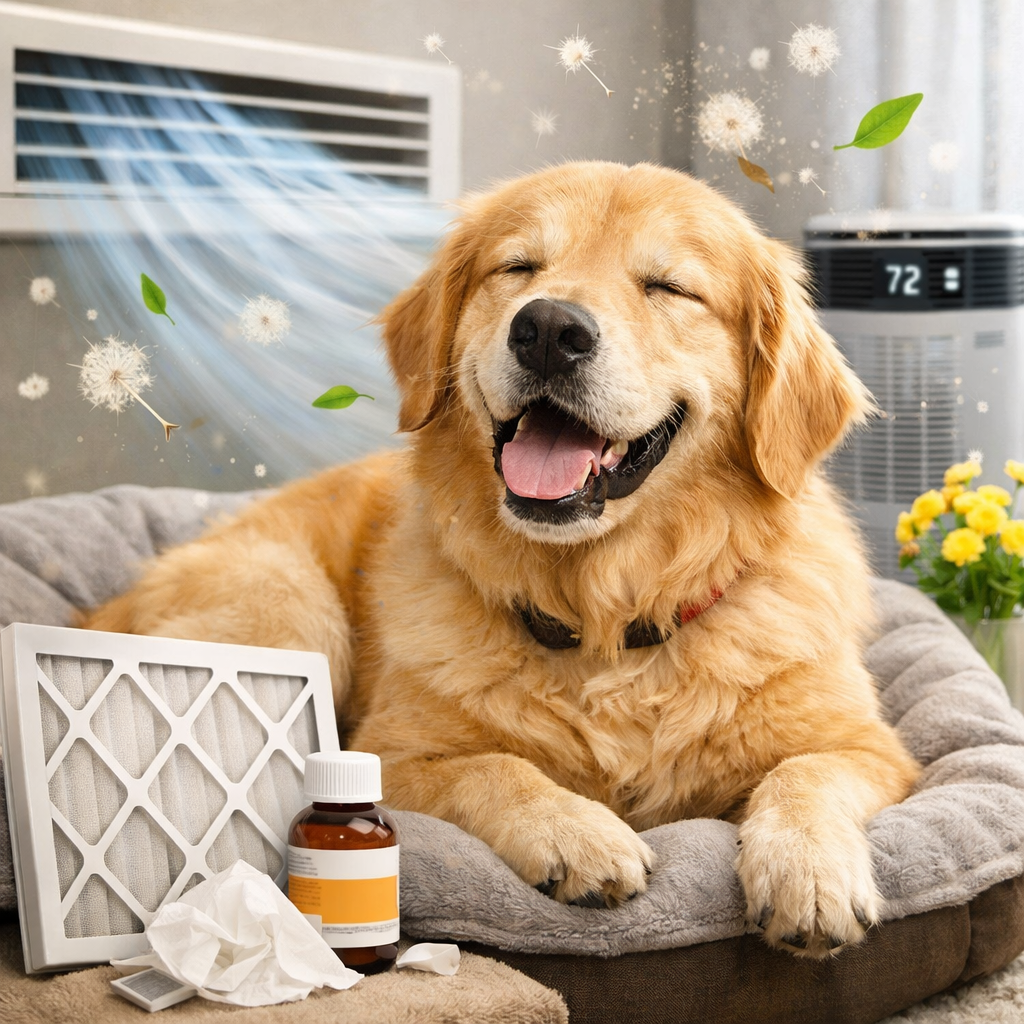
When spring breezes blow or autumn leaves begin to drop, most homeowners anticipate the changing seasons with a sense of renewal. However, for a significant number of families, these seasonal transitions bring a familiar sense of dread. We often associate sneezing, watery eyes, and congestion with human allergies, but our four-legged family members are just as vulnerable to environmental triggers.
Dogs experience seasonal allergies acutely, though their symptoms often manifest differently than ours. Instead of sneezing and blowing their noses, dogs tend to express allergic reactions through their skin, paws, and ears. Watching a beloved pet scratch constantly, chew their paws raw, or suffer from recurrent ear infections is heartbreaking for any pet parent.
Fortunately, you do not have to rely solely on prescription medications or expensive vet visits to bring your dog relief. One of the most effective, sustainable ways to manage canine seasonal allergies is to address the indoor environment where your dog spends the majority of their time. By upgrading your home heating, ventilation, and air conditioning (HVAC) air purifier, you can transform your living space into a safe haven. This article explores the science behind canine allergies, explains how advanced filtration systems protect your pet, and details the steps you can take to ensure everyone in your home breathes easier.
1. Understanding Canine Seasonal Allergies and Airborne Triggers
To effectively combat the microscopic irritants plaguing your dog, you must first understand how canine allergies work and what triggers them. Dogs possess an incredibly sensitive respiratory system and a vast skin surface area, both of which act as primary targets for environmental allergens.
The Manifestation of Canine Allergies
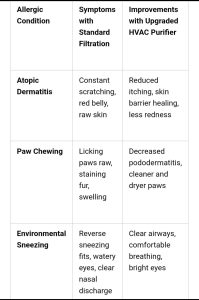
Unlike humans, who primarily experience respiratory distress from pollen, dogs suffer from a condition known as atopic dermatitis. When a dog inhales airborne allergens or absorbs them through their skin, their immune system goes into overdrive. This hyperactive response triggers the release of histamines, leading to intense itching, inflammation, and localized redness.
You might notice your dog constantly licking the tops of their paws, rubbing their face against the carpet, or scratching their underarms. Over time, this chronic scratching breaks the skin barrier, creating openings for secondary bacterial and yeast infections.
Common Seasonal Culprits
Indoor air quality fluctuates significantly with the seasons, carrying a rotating lineup of microscopic particles that can irritate your dog:
- Tree, Grass, and Weed Pollen: These microscopic grains travel miles on the wind, easily entering your home through open doors, windows, and your clothing.
- Mold Spores: Thriving in damp springtime environments or damp autumn leaves, mold spores readily colonize indoor spaces with high humidity.
- Dust Mites: While present year-round, dust mite populations often surge during humid seasons, aggregating in carpets, pet bedding, and upholstery.
Because dogs live closer to the floor, they are exposed to higher concentrations of these settled particles. Every time your dog lies down or rolls on the rug, they stir up a cloud of allergens that they promptly inhale or trap in their fur.
2. The Mechanics of HVAC Purification: Upgrading Beyond Standard Filters
Many homeowners believe that the basic filter inside their HVAC system is designed to clean the air they breathe. In reality, standard fiberglass filters exist solely to protect the internal machinery of the furnace and air conditioner from large dust bunnies and debris. They do almost nothing to improve indoor air quality or alleviate allergy symptoms.
The Power of high MERV Ratings
To shield your dog from seasonal allergens, you need to upgrade to a high-efficiency media filter or an electronic air purifier. Air filters are rated using the Minimum Efficiency Reporting Value (MERV) scale, which ranges from 1 to 16 for residential and commercial systems.
Standard filters usually sit between MERV 1 and MERV 4, catching less than 20 percent of small particles. By upgrading to a filter rated between MERV 11 and MERV 13, your system gains the ability to capture more than 85 percent of airborne particles as small as 1 micron. This includes the vast majority of tree pollens, mold spores, and pet dander, effectively stopping these irritants before they can circulate back into your living areas.
Whole-House Air Purifiers vs. Standalone Units
While portable air purifiers are helpful for single rooms, a whole-house HVAC air purifier offers comprehensive protection. These systems are installed directly into your existing ductwork, treating all the air that circulates through your home.
Advanced upgrades, such as electronic air cleaners or ultraviolet (UV) germicidal lights, work in tandem with high-MERV filters. Electronic purifiers use an electrostatic charge to attract and trap microscopic particles, while UV lights neutralize living microbes like mold spores and bacteria. This multi-layered defense ensures that the air circulating through your home is constantly scrubbed clean, providing continuous relief for your sensitive pet.
3. Holistic HVAC Maintenance: The Critical Role of Clean Air Ducts
Upgrading your air filter is an excellent first step, but it represents only one component of a healthy indoor ecosystem. The air filter can only clean the air that passes through it. If the channels delivering that air are contaminated, your upgrade will not reach its full potential.
The Hidden Reservoir of Allergens
Your home’s air ducts act as the respiratory tract of your household. Over months and years, these hidden metal channels accumulate a thick layer of dust, pollen, pet hair, dead skin cells, and mold spores. When your heating or cooling system kicks on, a powerful blast of air moves through these passages, dislodging settled debris and blowing it directly into your living spaces.
For a dog suffering from seasonal allergies, this constant cycling of old dust and seasonal pollen means their immune system never gets a break, even in the dead of winter when outdoor triggers are dormant.
Professional Intervention for Cleaner Indoor Air
To maximize the efficacy of your upgraded HVAC purifier, you must eliminate this hidden reservoir of irritants. For homeowners living in regions prone to heavy dust, agricultural pollen, or distinct seasonal shifts, professional duct cleaning is a vital home maintenance task.
Investing in specialized services like professional air duct cleaning tooele can systematically remove years of accumulated debris from your ventilation system. High-powered vacuums and specialized brushes clear out the entire duct infrastructure, ensuring that your newly installed, high-efficiency filter does not become prematurely clogged by old, trapped debris. When your ductwork is pristine, your upgraded air purifier can operate at peak performance, circulating genuinely clean, allergen-free air throughout every room.
4. Immediate Benefits of Clean Indoor Air for Your Dog
Investing in an upgraded HVAC purification system yields tangible, noticeable changes in your dog’s physical health and overall happiness. Within just a few weeks of cleaner air circulation, you can expect to observe several positive transformations.
Reduced Dermatological Distress
As the concentration of airborne pollen and mold spores drops inside your home, your dog’s skin will have an opportunity to heal. You will likely notice a significant reduction in chronic scratching, chewing, and licking behavior. Areas of redness and inflammation will begin to fade, allowing your pet to rest peacefully without being constantly interrupted by an intense urge to itch.
Decreased Secondary Infections
Chronic scratching damages the skin barrier, leading to costly vet visits for antibiotics and antifungal topical treatments. By removing the primary environmental triggers from the air, you stop the cycle of self-trauma. Fewer broken skin barriers mean fewer secondary bacterial infections, saving your dog from discomfort and saving you from expensive veterinary bills.
Better Sleep and Increased Energy
Constant itching is exhausting. Dogs suffering from severe seasonal allergies often sleep poorly, waking up frequently throughout the night to scratch or chew. Once the indoor air is purified, your dog can finally experience deep, restorative sleep. You will likely notice a return of their youthful energy, a greater willingness to play, and a happier overall demeanor.
Conclusion and Next Steps
Our homes are meant to be sanctuaries for every member of the family, including our pets. When seasonal allergies strike, relying entirely on medications to mask symptoms is often an incomplete solution. By addressing the root cause of indoor air pollution through a comprehensive HVAC upgrade, you provide your dog with continuous, systemic relief.
Taking action requires a multi-pronged approach to home maintenance:
- Assess and Upgrade: Examine your current furnace filter and replace it with a high-quality media filter rated MERV 11 or higher, ensuring your system can handle the increased airflow resistance.
- Clean the Core: Arrange for a comprehensive cleaning of your ventilation pathways to eliminate built-up toxins, dust, and historical pollen reservoirs.
- Maintain Consistency: Keep your HVAC fan setting on “On” rather than “Auto” during peak allergy seasons to ensure continuous air filtration, and remember to replace your filters every ninety days.
By pairing an advanced, high-efficiency air purifier with clean, well-maintained ductwork, you create an indoor environment that actively supports your dog’s health. Your pet will reward you with fewer veterinary visits, healthier skin, and a renewed zest for life. Take the step to upgrade your home’s air quality today, because a healthy home means a happy dog, and nothing beats the joy of breathing easy together.
Get more information or share your own with FidoMingle your pet’s organizer and travel app.
Guest Article by Sara M